 Bolshoi Theatre of Belarus
Bolshoi Theatre of Belarus
Bolshoi Theatre of Belarus
Bolshoi Theatre of Belarus
Bolshoi Theatre of Belarus
Bolshoi Theatre of Belarus
Bolshoi Theatre of Belarus
Â
Verdi’s Requiem is sometimes referred to as his 27th opera. And, indeed, it is one of his most brilliant works. This powerful mournful mass never ceases to remind us that “though the human spirit may be defeated, it is never truly broken.�
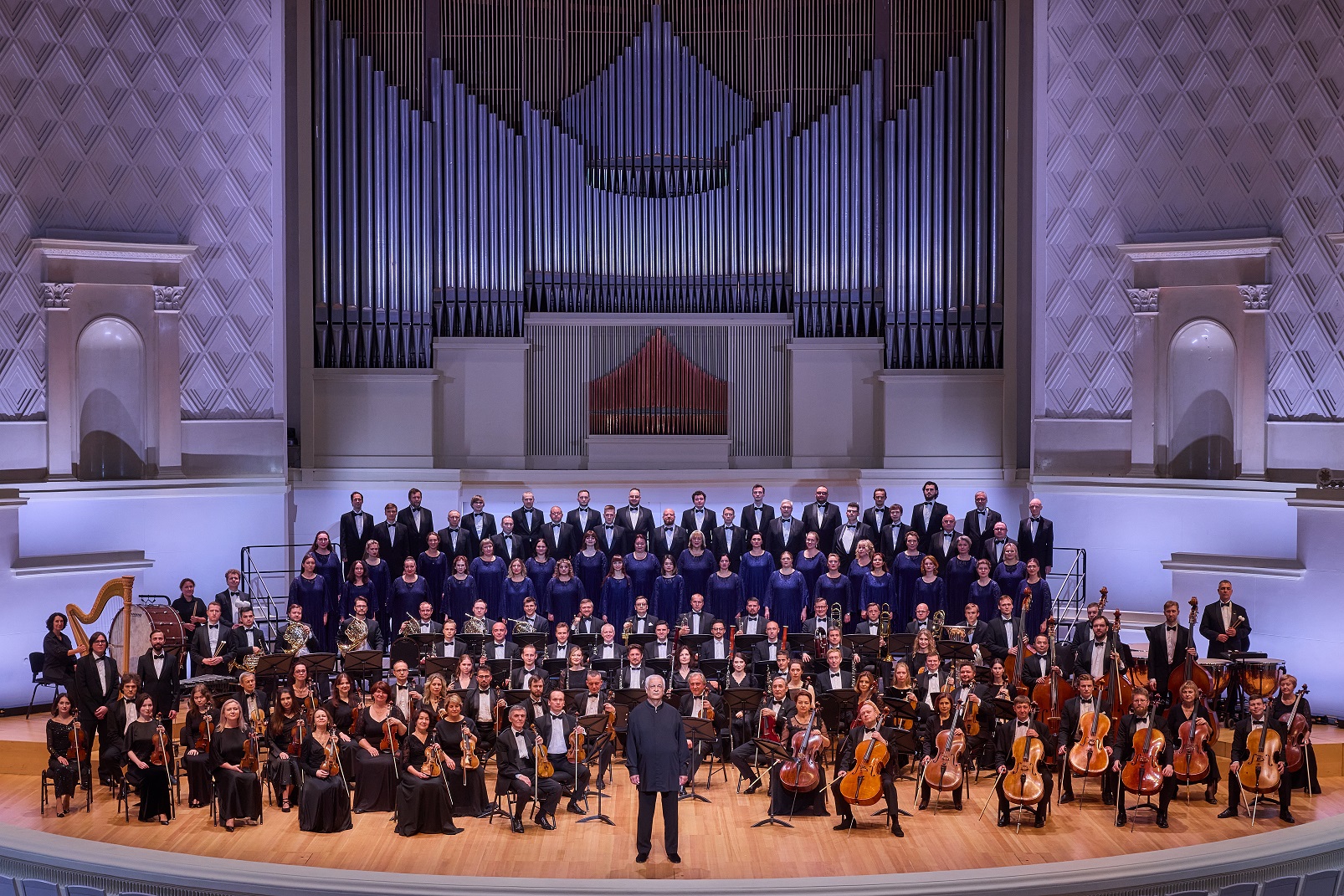
On November 15th a performance of Giuseppe Verdi’s masterpiece by the State Symphony Capella of Russia will grace the stage of the Bolshoi Theatre of Belarus for the very first time, led by the People’s Artist of Russia, Valery Polyansky, as both the artistic director and chief conductor.
The State Symphony Capella of Russia comprises over 200 musicians, including members of the choir and the orchestra, as well as soloists. It was founded in 1991 as a result of the merger between the State Symphony Orchestra of the USSR Ministry of Culture, headed by Gennady Rozhdestvensky, and the USSR State Chamber Choir, led by Valery Polyansky.
The orchestra was founded in 1957, and, until 1982, it functioned within the All-Union Broadcasting System. After 1982, it was renamed the State Symphony Orchestra of the USSR Ministry of Culture, and, at different times, was led by Samuel Samosud, Yuri Aranovich, and Maxim Shostakovich, with the likes of Yevgeny Svetlanov, Nathan Rachlin, Neeme Järvi, Vladimir Fedoseyev and other outstanding conductors taking the stand, too.
The Chamber Choir was founded by Valery Polyansky in 1971. In 1975, the Capella won the International Guido d'Arezzo Competition in Italy, receiving a Gold Medal in the category for academic singing and also the Golden Bell, a symbol of the best participating choir.
In 1980, the ensemble received professional status and became known as the State Chamber Choir of USSR Ministry of Culture.
It toured across all of the Soviet states and established a festival in Polotsk.
In 1986 Svyatoslav Richter invited Valery Polyansky’s choir to perform selected works by Tchaikovsky as part of the ‘December Evenings’ festival concert programme. The choir has performed in a variety of countries over the years: in Poland, for the ‘Singing Wroclaw’ festival, in Merano and Spoleto in Italy, in Izmir in Turkey, Naarden in the Netherlands, at the Promenade Concerts of Royal Albert Hall in the UK, and in the historical cathedrals of France in Bordeaux, Amiens and Albi.
The 27th of December, 1991 is considered to be the Capella’s birthday, when Gennady Rozhdestvensky led the collective in a performance of AntonÃn Dvořák’s The Spectre's Bride in the grand hall of the Moscow State Conservatory. In 1992 Valery Polyansky took on the mantle of artistic director and chief conductor of the Capella.
Under his leadership, the Capella has taken part in Gennady Rozhdestvensky’s annual concert programmes, and, in 2016, participated in the Russian Symphonic Forum in Ekaterinburg. In 2019 it toured across Italy, Germany, the Netherlands, Croatia, Slovenia and Southeast Asia as part of Alfred Schnittke’s 80th Anniversary festival programme.
Valery Polyansky’s extensive repertoire includes symphonies, cantatas and oratorios, ranging from Bach to the magna opera of our contemporaries. The maestro has performed unique concert cycles and programmes, including both stage and concert versions of operas. The conductor’s repertoire consists of over 70 operas and also includes a range of operettas.
The Capella’s international and domestic premieres include the first performance of Alfred Schnittke’s 1983 Faust Cantata in the Soviet Union and the Russian premiere of his 2000 opera, Gesualdo, Alexey Nikolaev’s Pushkin’s Final Days premiere in Moscow in 2007 and in Tula in 2010, Alexander Tchaikovsky’s opera The Legend of the City of Yelets, the Virgin Mary, and Tamerlane in 2010 and his oratori0 The Sovereign's Cause in Lipetsk in 2013.
The conductor’s discography boasts over 100 records from some of the leading record companies both in Russia and abroad.
The November 15th performance of Giuseppe Verdi’s Requiem will feature top soloists from the State Symphony Capella of Russia, such as the Honoured Artist Lyudmila Kuznetsova (mezzo-soprano), as well as the internationally acclaimed Julia Tomina (soprano), Maksim Sazhin (tenor), and Ruslan Rozyiev (bass).
Â
Â
Подготовила Е.Балабанович. Материал размещен 07.09.2026г.